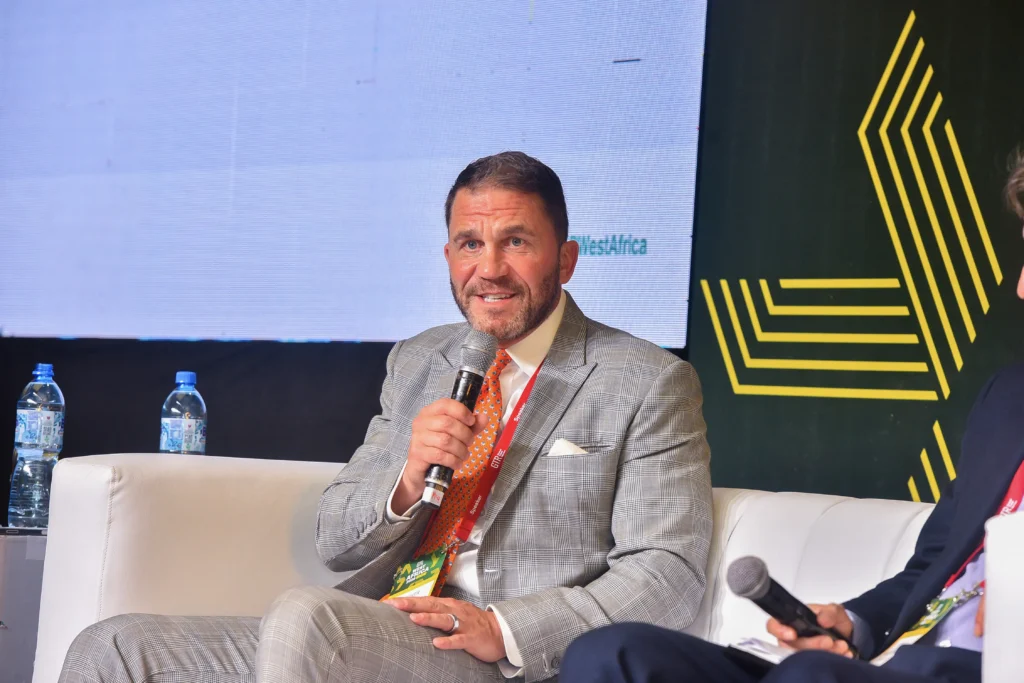
Our governance strength is independently validated by dual AA credit ratings from Agusto & Co. and GCR Ratings, a powerful testament to our financial soundness and commitment to investor protection – Orga

Kai Orga, Managing Director of ARM investment Managers, in this interview with BusinessDay, breaks down the transition of mutual funds from a niche financial product to the cornestone of Nigerian wealth creation, and how ARM is navigating a high-interest-rate environment to deliver value, amongst others. Excerpts:

In an era of persistent double-digit inflation, how has ARM adapted its fund management strategy to ensure that mutual funds move from being mere “savings buffers” to genuine wealth-creation tools for Nigerians?

Inflation has tested every Nigerian household, underscoring the importance of preserving capital and extracting more value from every naira invested. That’s where expertise matters. At ARM Investment Managers, we treat volatility as a source of opportunity, not paralysis deploying a coordinated investment process that actively seeks mispriced value across asset classes.

Our strategy is anchored in disciplined active management: knowing what to buy or sell, when to act, and how much exposure to take relative to clearly defined benchmarks. We continuously test our views against macroeconomic conditions and market dynamics, refining allocations to keep performance competitive through cycles.

Crucially, we offer a suite of products calibrated to different risk profiles and objectives and we manage each fund strictly to its stated policy. That consistency and transparency enable us to shift mutual funds from mere inflation buffers to durable engines of wealth creation.

Mutual funds are often cited as the “premier wealth vehicle” because of their accessibility. What specific barriers, technological or psychological, has ARM broken down to bring institutional-grade investing to the everyday Nigerian?

We started by breaking the communication barrier, replacing jargon with plain language so people understand both benefits and risks. Through structured content, webinars, digital tools and how‑to videos, we’ve raised product literacy, helping investors grasp not just what to buy, but why.

We then lowered the cost of entry. Institutional‑grade access no longer requires institutional capital. With minimums from ₦1,000 on funds like the ARM Money Market Fund, Nigerians can start small and build consistently, without compromising professional management. We’ve also opened doors to high‑grade fixed income previously inaccessible to lower‑ticket investors, advancing financial inclusion in practice, not just policy.

On the technology front, ARM One, our flagship mobile platform on Android and iOS, brings the entire investing journey online: account opening, fund purchases, portfolio tracking, performance insights, and redemptions. Whether you are a market trader in Onitsha or a young professional in Port Harcourt, you now have the same seamless access to ARM’s investment expertise as an asset management company in Lagos.

To address Nigeria’s trust deficit, all ARM mutual funds are SEC-registered, independently custodied, and trustee-supervised. We publish performance transparently, pay dividends promptly, and deliver electronic statements to every unitholder. Our governance strength is independently validated by dual AA credit ratings from Agusto & Co. and GCR Ratings, a powerful testament to our financial soundness and commitment to investor protection.

Finally, we invest in education and community. Through the Realising Ambitions blog, in‑app insights, social content, partnerships, webinars, and CSR Initiatives, we promote financial literacy and demystify diversification, compounding, and asset allocation. Programs like Refer & Earn harness social proof, as people invest more confidently when someone they trust has had a positive experience.

Our product range now mirrors institutional choice: the ARM Money Market Fund (low risk, high liquidity), ARM Fixed Income Fund (steady medium‑term growth), ARM Discovery Balanced Fund (equity‑driven appreciation), ARM Halal Balanced Fund (Shariah‑compliant), and the ARM Eurobond Fund (dollar protection). What was once exclusive is now everyday accessible.

Bottom line: We have broken three barriers, financial (low minimums), technological (mobile access), and psychological (regulation, transparency, education), so more Nigerians can invest with confidence

3. What investment strategies and asset-allocation decisions enable ARM to move beyond capital preservation and consistently deliver inflation-adjusted growth?

We practice active portfolio management within robust regulatory and internal policies, giving us the flexibility to respond to market shifts without losing discipline. Asset‑allocation decisions reflect our macroeconomic outlook, fund guidelines, risk profiles, and return objectives. Our aim isn’t just to beat inflation, it’s to deliver attractive risk‑adjusted returns consistently. That principle sits at the heart of every allocation we make.

Given the volatility of the Naira and the fluctuating yields on Treasury Bills, how is ARM currently balancing its portfolios to outperform the “inflationary floor” without over-exposing retail investors to risk?

Given the volatility of the Naira and the frequent repricing across the fixed income curve, generating sustainable real returns has become structurally more challenging. Persistently high inflation and pronounced currency pass-through effects have further raised the hurdle, making consistently positive real returns, particularly within traditional fixed income assets, more difficult to achieve.

Against this backdrop, our objective remains clear: to deliver positive, risk-adjusted real returns that preserve purchasing power while avoiding undue volatility for retail investors. We pursue this through a combination of strategic asset allocation and disciplined tactical positioning across public markets and, where mandates permit, selective exposure to alternative asset classes that can enhance diversification and improve the resilience of real returns.

However, in an environment where inflationary risks remain elevated, we recognize that fixed income exposures alone may struggle to consistently outperform the inflationary floor. Accordingly, where investment mandates permit, allocations are increased to equities, with a focus on fundamentally resilient bellwether stocks that exhibit strong earnings visibility and pricing power.

Beyond public markets, alternative asset classes are incorporated where appropriate, including real assets and other inflation-hedging strategies, to enhance diversification and strengthen the durability of real returns.

In essence, we remain highly conscious of the need to develop innovative, well-diversified portfolio solutions that can deliver resilient real returns for our clients, while prudently managing downside deviations and preserving capital across market cycles.

In the Nigerian market, trust is a currency as valuable as the Naira. How has the regulatory evolution of the SEC and the transparency of the mutual fund structure helped win over investors who were previously skeptical of formal financial markets?

The SEC has tightened the system where it matters most: governance, licensing, disclosures, and periodic reporting. In Collective Investment Schemes, assets must be held by independent custodians with trustee oversight, enforcing true separation of duties and adherence to the trust deed. This architecture adds visible checks and balances.

The Commission has also broadened market access, supporting product innovation, investor education and digital distribution, helping demystify investing for the retail segment. In an environment where governance gaps once eroded confidence, a stronger regulatory framework has been pivotal to restoring trust and encouraging long‑term participation.

We have seen a surge in interest in Money Market Funds and Dollar-Denominated Funds. Do you see this as a temporary hedge against current economic headwinds, or a permanent shift in how Nigerians view portfolio diversification?

Both are responses to today and a reset for tomorrow. Money Market Funds deliver higher yields than savings accounts with daily liquidity, making them a practical alternative for everyday cash management. Dollar‑denominated funds address currency risk, offering naira depreciation protection, a hedge against imported inflation, and access to Eurobond yields that can be compelling in hard currency terms.

While the surge reflected marcro headwinds, it also reveals a structural evolution: investors are embracing multi‑currency, multi‑asset planning. As financial literacy and digital access deepen, these products will not just be safe harbors; they will remain core building blocks of retail portfolios.

With the rise of “Invest-tech,” how has ARM integrated digital platforms to transition from a traditional asset manager to a fintech-driven powerhouse? Has this lowered the cost of entry for the average investor?

We’ve built proprietary digital rails and forged strategic partnerships. The ARM One app is a unified, mobile‑first hub for onboarding, accessing all ARM mutual funds, trading securities, tracking real‑time performance, receiving tailored insights, and executing transactions securely.

Partnerships with leading fintech platforms extend our distribution nationwide, so investors can access institutional‑grade funds in a few taps, with low minimums starting from ₦1,000, no branch visits, and no paperwork.

Has the cost of entry fallen? Unequivocally, yes. Digital onboarding, micro‑ticket investing, and automated contributions have removed the friction and cost that once kept people out. What used to require a physical office now needs only a smartphone and data.

Beyond individual wealth, how is the collective pooling of capital in ARM’s mutual funds currently supporting Nigeria’s broader economic infrastructure and corporate growth?

Beyond individual wealth creation, the collective pooling of capital in ARM’s mutual funds plays a meaningful role in Nigeria’s broader economic development. A key example is the MOFI Real Estate Investment Fund (MREIF), which mobilizes long-term capital to finance residential mortgages at single-digit interest rates, well below prevailing market levels. This directly improves housing affordability, deepens the mortgage market, and supports growth across Nigeria’s real estate and construction value chain.

In fixed income, our funds also provide steady liquidity to government and quasi-government securities, helping finance critical infrastructure in housing, power, and transport.

On the corporate side, ARM’s equity and balanced funds channel patient capital to well-governed Nigerian companies, supporting expansion, strengthening balance sheets, enabling job creation, and enhancing market discipline through active price discovery and engagement.

Looking forward, what key macroeconomic, regulatory, and demographic trends will shape the next phase of mutual fund growth in Nigeria, and how is ARM positioning itself to lead that evolution? Will we see more specialized funds (like ESG or Infrastructure-focused retail funds) becoming mainstream?

Macro: A moderation in inflation and a shift by the CBN toward monetary normalization would stabilize real yields, setting the stage for longer‑duration fixed income, balanced funds, and specialized strategies. Continued FX reforms and transparency will be critical to restore confidence, revive foreign portfolio flows, and broaden global diversification.

Regulation: The SEC’s openness to product innovation should spur growth in ETFs, REITs, Shariah‑compliant funds, thematic vehicles and alternative, with governance, ESG integration, and investor suitability separating the seasoned managers from the rest.

Demographics: Nigeria’s millennial cohort is moving into higher‑earning years, creating demand for goal‑based solutions, from home ownership and education trusts to multi‑fund wealth plans. These investors value professional management, diversification, and downside protection, and are comfortable assembling portfolios across several funds to meet life goals.

Specialization is already moving mainstream. When framed locally, ESG and ethical investing resonate; infrastructure, private credit, and real assets are attractive for stable income and inflation hedging. ARM has been proactive: our MREIF expands access to affordable mortgages, tackling a critical structural need. Our private Debt fund open differentiated yield opportunities, and our deepening focus on alternatives enhances diversification and long‑term value creation.

ARM Launches ₦200 Billion Private Debt Fund to Expand Access to Long-Term Capital for Nigerian Businesses

ARM Launches ₦200 Billion Private Debt Fund to Expand Access to Long

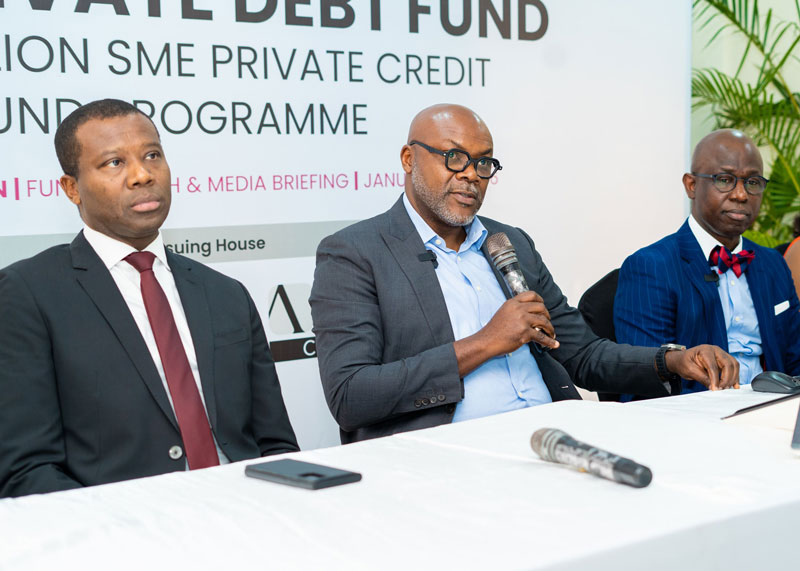
ARM Investment Managers has officially launched the ARM Private Debt Fund, a ₦200 billion private credit programme designed to expand access to structured, long-term financing for scalable Nigerian businesses while offering institutional investors a stable and diversified source of income.

The Fund was formally introduced to the market at a media briefing held in Lagos on Monday, January 12, 2025. The session brought together members of the business and financial press to discuss the growing importance of private credit in Nigeria’s capital markets and its role in addressing long-standing financing gaps faced by small and medium-sized enterprises.

The ARM Private Debt Fund is structured as a closed-ended private credit vehicle and is focused on providing non-bank financing to businesses with strong operating fundamentals and predictable cash flows. The Fund will deploy capital primarily through senior secured term loans and revolving credit facilities, alongside selective subordinated debt where appropriate. Series I of the programme is targeting an initial raise of ₦25 billion under a broader ₦200 billion shelf programme.

Nigeria’s SMEs remain a critical driver of economic activity, contributing a significant share of GDP and employment across the country. Despite this importance, many viable businesses continue to struggle to access long-term financing that aligns with their growth cycles. Traditional banks, constrained by regulatory requirements, funding costs, and balance sheet considerations, often prioritise short-term lending or sovereign exposures. This dynamic has created a structural financing gap that private credit is well positioned to fill.

Private credit provides an alternative source of capital by allowing professional investment managers to lend directly to businesses using flexible, cash-flow-aligned structures. Unlike conventional bank loans, private credit facilities are designed to match the operational realities of businesses, offering longer tenors and tailored repayment terms while maintaining strong legal and risk controls. For growing enterprises, this form of financing can support expansion, asset acquisition, working capital optimisation, and long-term competitiveness.

Speaking at the launch, Deji Opeola, Chief Executive Officer of the ARM Private Debt Fund, described the initiative as a deliberate response to Nigeria’s evolving financing needs.

According to him, the Fund has been structured to provide patient and well-designed capital to businesses while maintaining a strong focus on capital preservation and risk management for investors. He noted that disciplined credit underwriting, asset-backed lending, and active portfolio monitoring are central to the Fund’s investment approach.

From an investor perspective, the ARM Private Debt Fund is targeted at qualified institutional investors, development finance institutions, family offices, and high-net-worth individuals seeking portfolio diversification through private credit. The Fund is expected to deliver returns of approximately 300 basis points above the Federal Government of Nigeria 10-year bond yield, subject to market conditions. Returns are driven primarily by interest income rather than market price movements, offering investors exposure to a less volatile asset class relative to public equities and bonds.

Strong governance is a core pillar of the Fund’s design. Investment decisions are overseen by independent governance structures, including an Investment Committee and an Advisory Board, supported by strict concentration limits, conservative leverage, and continuous portfolio oversight. This framework is intended to ensure consistency, transparency, and disciplined risk management throughout the life of the Fund.

Beyond investors, the launch of the ARM Private Debt Fund also represents an opportunity for eligible SMEs and mid-sized businesses seeking growth capital. The Fund is open to businesses with proven operating histories, sound governance structures, and clear plans for the use of funds. Financing is targeted at companies looking to expand operations, strengthen working capital, acquire productive assets, or optimise their balance sheets. Priority sectors include manufacturing, trade and distribution, agribusiness value chains excluding primary agriculture, logistics, services, and technology-enabled businesses.

The Fund forms part of ARM’s broader alternatives investment platform, which spans infrastructure, real estate, trade finance, and sector-focused strategies. Domiciled in Mauritius and structured as a multi-currency vehicle, the ARM Private Debt Fund is designed to deploy both naira and hard-currency capital. While the initial focus is Nigeria, the platform has been structured to support expansion into other Sub-Saharan African markets over time.

Commenting on the strategic significance of the Fund, Wale Odutola, Group Chief Executive Officer of ARM, described the launch as the foundation of a long-term private credit platform for the Group. He noted that the objective is to support sustainable business growth while contributing to the development of a deeper and more resilient private credit market in Nigeria.

With the launch of the ARM Private Debt Fund, ARM is positioning itself at the forefront of private credit investing in Nigeria. By connecting long-term capital with productive enterprise, the Fund aims to support business growth, job creation, and economic resilience while delivering consistent, risk-adjusted returns to investors.

Buy Your Dream Home: MREIF Introduces Lower Interest Rates for Nigerians

LAGOS, NIGERIA — The Ministry of Finance Incorporated Real Estate Investment Fund (MREIF), a key driver of affordable homeownership in Nigeria has announced a major reduction in its mortgage requirements. The interest rate has now been reduced from a fixed rate of 12% per annum to 9.75% per annum.

The revised terms for the fund scheme, managed by ARM Investment Managers, is designed to address the financial constraints faced by many aspiring homeowners. By significantly lowering the entry barrier, MREIF and its group of financial partners are fostering a more inclusive and accessible housing market.

Commenting on the development, Mr. Wale Odutola, the Group CEO of ARM, stated, “Our role as fund managers is to ensure MREIF operates as a credible vehicle for lasting impact. The reduction in the down payment, alongside the competitive interest rate, is a strategic move to empower more Nigerians. This is a testament to the power of a public-private partnership that is genuinely focused on delivering tangible solutions and contributing meaningfully to Nigeria’s economic progress.”

The new terms are expected to accelerate the transition from renting to owning, providing financial stability and long-term security for countless Nigerian families.

It is important to note that the downpayment for the selected property can also be funded from the pension accounts (RSA) of willing beneficiaries, further reducing all barriers to participation in the scheme.

To learn more about this groundbreaking scheme, visit: https://www.arm.com.ng/mreif-about-mreif/

MREIF Cuts Down Payment to 10% and Lowers Mortgage Rates for Nigerians

MREIF-Cuts-Down-Payment-to-10%

LAGOS, NIGERIA — The Ministry of Finance Incorporated (MOFI) Real Estate Investment Fund (MREIF) has unveiled new mortgage terms designed to make homeownership more attainable for millions of Nigerians. In a landmark move, the minimum down payment has been reduced from 20% to just 10%, while the fixed mortgage interest rate has been lowered from 12% per annum to 9.75% per annum.

This policy shift, part of the Federal Government’s Renewed Hope agenda, tackles one of the biggest barriers to homeownership — the high initial equity contribution. With this change, more Nigerians can move from renting to owning their own homes.

The revised terms apply to MREIF’s long-term mortgages with repayment periods of up to 20 years, combining lower upfront costs, reduced interest rates, and extended tenure to ease the financial burden on households.

Dr. Armstrong Takang, CEO of MOFI, stated:
“These new terms reflect our mission to build a sustainable and inclusive housing market. By reducing the down payment and maintaining a low interest rate, we are removing major barriers to homeownership and creating a pathway to a brighter, more secure future for families across Nigeria.”

Wale Odutola, Group CEO of ARM, fund managers for MREIF, added:
“Our role as fund managers is to ensure MREIF operates as a credible vehicle for lasting impact. The reduction in the down payment, alongside the competitive interest rate, is a strategic move to empower more Nigerians. This is a testament to the power of a public-private partnership that is genuinely focused on delivering tangible solutions and contributing meaningfully to Nigeria’s economic progress.”

Beneficiaries can also use funds from their Retirement Savings Account (RSA) to cover the down payment, further reducing entry barriers.

Learn more at: https://www.arm.com.ng/mreif-about-mreif/

ARM announces New CEO as part of Strategic Leadership Transition

ARM Holding Company, one of Nigeria’s foremost investment management firms, has announced the appointment of Wale Odutola as Group Chief Executive Officer and Osahon Ogiemudia as Executive Director, effective July 2025. This strategic leadership transition marks a significant milestone in ARM’s 30-year journey and positions the Group for a new chapter of innovation, enterprise growth, and scale that is firmly aligned with Nigeria’s evolving economic landscape.

The announcement follows the planned exit of Ms. Jumoke Ogundare, the current Group CEO, who will step down on June 30, 2025, after three remarkable decades of service, including a decade of leadership as Group CEO. Under her leadership, ARM reinforced its position as a trusted partner to individuals and institutions, expanded its asset management footprint, and deepened its impact across sectors.

Commenting on the leadership change, Ms. Jumoke Ogundare, the outgoing Group CEO, stated: “It has been a privilege to lead ARM. I am confident that Wale and Osahon will continue to uphold our core values while exploring new paths for innovation, growth, and stakeholder impact. Their leadership will ensure that ARM remains firmly aligned with its mission and long-term strategic objectives.”

Wale Odutola, the incoming CEO, brings nearly three decades of experience in Nigeria’s financial services sector. He currently serves as Deputy CEO of ARM Holding Company and has previously held leadership roles across key subsidiaries, including ARM Pension Managers, ARM Securities, and ARM Properties Plc. Recognized for his strategic foresight, disciplined execution, and operational excellence, Wale has played a central role in driving group-wide performance, business integration, and resilience.

Commenting on his appointment, Mr. Odutola said: “ARM has always stood for vision, integrity, and long-term value. I am honoured to lead this next chapter of growth alongside a team deeply committed to excellence and innovation. We will continue to anticipate the needs of our clients, contribute meaningfully to Nigeria’s economic progress, and uphold the values that have defined ARM for three decades.”

Osahon Ogiemudia, who assumes the role of Executive Director, has led critical operational and corporate functions at ARM Holding Company. With a proven track record across various Group subsidiaries, including ARM Pension Managers and ARM Life, he brings a deep institutional knowledge and a strong focus on execution, client alignment, and sustainability.

This leadership transition reflects ARM’s long-standing philosophy of internal growth, institutional continuity, and client-centred evolution. It ensures that the Group remains resilient and agile in meeting the dynamic needs of its clients and partners in an increasingly complex financial environment.

Commenting on the appointments, ARM’s Chairman, Deji Alli, stated: This transition marks not just a change in leadership, but a renewed commitment to growth and relevance in today’s Nigeria. As the economy shifts and opportunities emerge, ARM must evolve to meet the ambitions of a new generation of investors and institutions. With Wale and Osahon, we have a leadership team that is deeply experienced, forward-looking, and grounded in our mission. They are well-positioned to guide ARM’s transformation into a more agile, growth-oriented enterprise.”

Known for its specialization in Traditional Asset Management and Specialized Funds, ARM continues to set industry standards in innovation, governance, and sustainable investment practices, remaining at the forefront of sustainable wealth creation in Africa.

About ARM Holding Company

Founded in 1994, ARM Holding Company is a leading Nigerian investment management firm, providing comprehensive asset management and financial advisory services to individual and institutional investors. We enable businesses to thrive and help our clients to maximize their returns and realize their most important goals. For over three decades, we have built a firm uniquely equipped to achieve these objectives, and our reputation for quality research, investment expertise, and value-added services has endeared us to clients both locally and internationally.

For more information, visit www.arm.com.ng.

MOFI, Family Homes Funds, MREIF Unveil Plan To Ease Mortgage Terms For Federal Civil Servants

The Ministry of Finance Incorporated (MOFI), Family Homes Funds Limited (FHFL), and the Asset & Resource Management Holding Company Limited (ARM) have unveiled plans to ease mortgage terms for Federal civil servants in Nigeria under the MOFI Real Estate Investment Fund (MREIF).

ARM represents MREIF in the arrangement, being the designated Fund Managers.

This development follows extensive consultations with key stakeholders aimed at continuously improving the terms for accessing mortgages under the MOFI Real Estate Investment Fund (MREIF) for Federal Civil Servants.

The goal of this agreement is in full alignment with the central goal of MREIF, which is to expand access to housing for Nigerians on a mass scale through a credible and innovative financing model. 

Expanding Access by Lowering Interest Rate, Equity Contribution

The agreement seeks to actualise key objectives, which include lowering the interest rate and equity contribution required from homebuyers, creating a framework to deliver mortgages at more affordable interest rates through blended finance solutions, and contributing to the One Million Homes Housing Project, a major component of the Renewed Hope Agenda.

A Result-Driven Partnership

The structure of this formal collaboration features MOFI, FHFL, and MREIF.

To address the equity contribution barrier, both MREIF and FHFL will jointly provide significant portions of the required mortgage funding, leaving homebuyers with a convenient equity contribution of only 10%. Additionally, this arrangement reduces the interest rate for civil servants to a single digit.

The interest rate reduction strategy includes blending funding sources with varying cost of capital, allowing loans to be delivered at significantly reduced interest rates. FHFL’s access to a funding line from the African Development Bank (AfDB) will play a vital cost-lowering role here.

As a mortgage scheme, a well-structured loan distribution and management plan has been proposed, which will feature engagement of Partner Mortgage Lenders to grant the mortgage loans, with all loans made to comply with the Nigeria Mortgage Refinance Company (NMRC)’s underwriting standards.

Towards Lasting Impact

Commenting on the partnership, MOFI’s CEO, Dr. Armstrong Takang, described it as a “strategic cost-management intervention” for civil servants and other beneficiaries within the band.

On his part, FHFL’s MD, Mr. Abdul Mutallab Mukhtar, stated that through the arrangement, Federal civil servants would finally “realise their dream of owning decent homes”.

ARM’s Deputy Managing Director, Wale Odutola, expressed ARM’s confidence in delivering an impactful financing solution through MREIF, which he described as “a credible vehicle for lasting impact”.

About MREIF

The MOFI Real Estate Investment Fund (MREIF) is a Securities and Exchange Commission (SEC)-approved and regulated fund designed to expand homeownership and strengthen Nigeria’s housing sector. With an AAA rating from Agusto and an AA rating from GCR, MREIF has established itself as a highly credible, market-driven investment platform to address Nigeria’s housing finance gap.

By bringing together public and private sector capital, MREIF aims to make affordable housing more accessible to Nigerians while supporting economic growth. With NGN250 billion already raised and over 100 mortgage finance disbursements made across three geopolitical zones, MREIF is a key driver of investment in long-term housing finance and reducing Nigeria’s housing deficit.

To begin your mortgage application with MREIF, call 02013305005, visit mreif.com.ng, or email [email protected].

DAAYTA 2025: ARM Awards ₦12 Million to Mariam Grey Pharmacy

Lagos, Nigeria – May 06, 2025

The 10th anniversary edition of the Deji Alli ARM Young Talent Award (DAAYTA) has concluded on a high note with a special cheque presentation ceremony, where Jennifer Esiaba, founder of Mariam Grey Pharmacy, was awarded a ₦12 million grant.

The event which held on April 24, 2025, marked a decade of nurturing and supporting young Nigerian entrepreneurs with transformative ideas and the potential to create lasting societal impact.

This grant will enable the company refine its business model and undergo entrepreneurial training at the Enterprise Development Centre (EDC) of Pan-Atlantic University and participate in an acceleration programme hosted by a leading Lagos-based innovation hub all designed to support the company’s growth and long-term viability.

DAAYTA, established in 2015 in honour of ARM’s founding CEO, Deji Alli, is a flagship initiative designed to identify and empower early-stage businesses that address real challenges with sustainable and scalable solutions. Over the past 10 editions, the programme has become a beacon for innovation, entrepreneurship, and youth-led impact across Nigeria.

From numerous applications received nationwide, seven standout finalists were shortlisted for the final pitch: Dropp, Suwk Technologies Limited, Farm Boxx, Fertitude, Ilode Bio Energy, Dot Campus Africa, and the eventual winner, Mariam Grey Pharmacy. These ventures demonstrated remarkable ingenuity and a shared commitment to solving critical challenges across sectors.

DAAYTA 2025 Finalists

A panel of distinguished judges comprising industry leaders, investors, and innovation experts, evaluated the pitches before awarding the ₦12 million grant to Mariam Grey Pharmacy – a healthcare startup committed to making healthcare accessible and hassle-free for everyday Nigerians.

Speaking at the event, Jumoke Ogundare, CEO of ARM Group, noted: “It’s been 10 years since ARM began this remarkable journey with DAAYTA empowering entrepreneurs whose ideas are already changing lives across Nigeria. The programme has stayed true to its mission, and I can only imagine how many lives have been touched. As we celebrate this 10th anniversary edition, I say congratulations to the DAAYTA team, the winners, and every entrepreneur who has shared in this vision. The next decade promises even greater impact.”

Reflecting on the journey, Deji Alli, Chairman of ARM Holdings, added: What DAAYTA has achieved in the last 10 years is only a glimpse of what’s possible. With the momentum now established, I believe her impact on incubating and nurturing groundbreaking businesses will be even more profound in the years to come. I want to thank the ARM team and programme coordinators for their commitment to building something so meaningful and lasting.”

As ARM commemorates a decade of DAAYTA, this milestone reaffirms its dedication to fueling the entrepreneurial spirit that drives innovation, job creation, and inclusive growth in Nigeria.

About ARM

Founded in 1994, Asset & Resource Management Holding Company Limited (ARM) is one of Nigeria’s leading non-bank financial institutions. With a legacy of innovation and trust, ARM offers a broad range of asset management and investment solutions for individuals, corporates, and institutions.

For more information about ARM and the DAAYTA program, visit www.arm.com.ng.

MOFI Real Estate Investment Fund (MREIF) Receives Triple A Rating from Agusto & Co for its ₦100 billion Series 2 (“Commercial Issuance”) Issuance under the ₦1 trillion Program

Lagos, February 2025 – ARM Investment Managers Limited (the Fund Manager) is pleased to announce that the Ministry of Finance Incorporated (MOFI) Real Estate Investment Fund (MREIF) has been granted a AAA rating, the highest possible rating by Agusto & Co, a leading rating agency. This prestigious rating is a testament to MREIF’s Sponsor’s support, robust risk management framework, and commitment to delivering competitive returns to its investors.

The highest possible rating from Agusto reflects the strength of MREIF’s Sponsor, the Fund Manager and the Trustee, its experienced and skilled investment team, and its rigorous investment process.

“We are thrilled to receive this prestigious rating from Agusto,” said Mrs. Kai Orga, Managing Director of ARM Investment Managers. “This recognition is a validation of the entire MREIF team’s hard work and dedication to delivering exceptional results to investors. We will continue to strive for excellence and maintain our commitment to transparency, governance, and investor satisfaction.”

The Agusto rating is a significant milestone for MREIF, as it provides investors with an independent and objective assessment of the Fund’s creditworthiness and investment quality. This rating will enhance MREIF’s reputation and credibility in the market.

About MREIF

MREIF is a closed-end real estate investment fund established as a unit trust scheme, pursuant to the Securities and Exchange Commission’s Rules and Regulations, domiciled in Nigeria and denominated in Naira. The Fund is sponsored by MOFI and managed by ARM Investment Managers.

The mandate of the Fund is to bridge the Nigerian housing deficit, by addressing both the demand and supply side challenges through the provision of low-rate mortgages to intending home buyers through Eligible Financial Institutions (“EFIs”), and offtake guarantees to developers as a credit enhancement for raising construction finance for the development of residential homes.

The Fund will provide financing to EFIs at concessionary interest rates to offer long-term, low-cost, mortgage loans to qualified home buyers, thus creating effective demand for housing supplied within the Scheme and developing the mortgage market.